
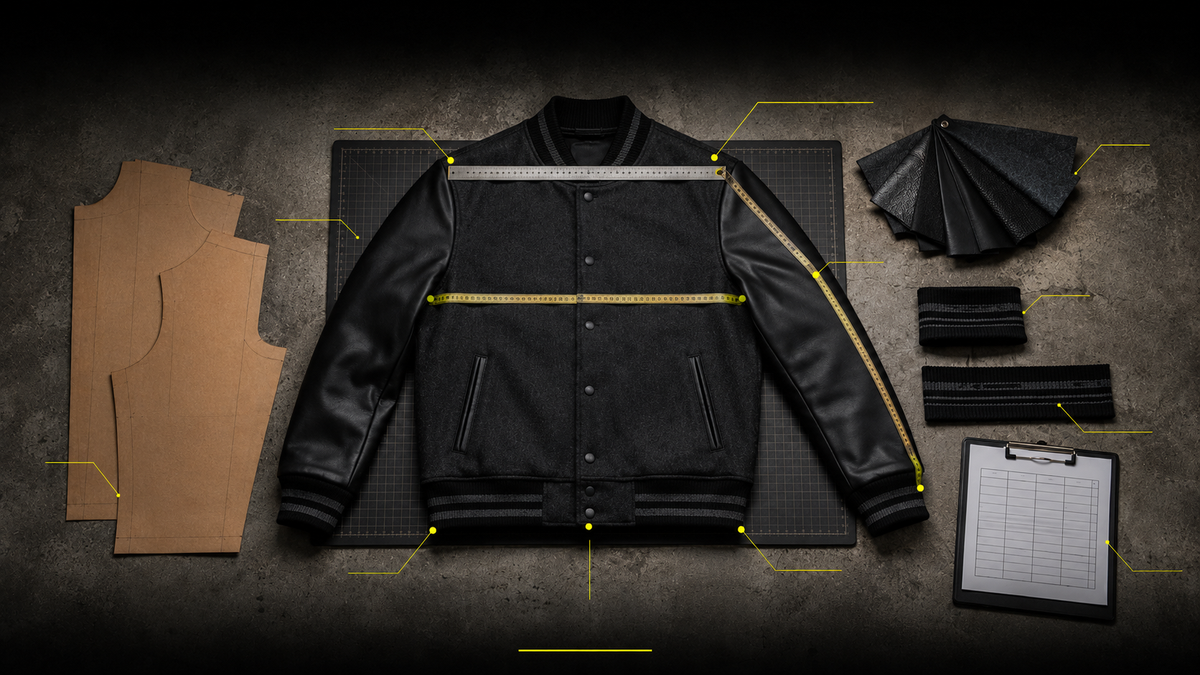
Custom varsity jacket sizing should start with a defined silhouette, a base-size pattern and an agreed measurement method — not a generic unisex chart. A classic boxy letterman and an oversized streetwear varsity may share a size label yet need different shoulder, armhole, sleeve, body and rib proportions. Lock those relationships in a tech pack, fit sample and PP sample before inspecting bulk against the approved standard.
To build reliable custom varsity jacket sizing, first define who will wear the jacket and whether the target fit is classic boxy or oversized. Choose one base size, specify every critical point of measure (POM), state exactly how each POM is taken, then develop the grade rules around the silhouette. Sleeve shell, lining and rib recovery must be assessed as part of the fit. There is no universal varsity jacket measurement chart or tolerance that works for every construction.
Varsity jacket sizing is a system, not a label
“Medium” is only a size name, not a technical specification. A natural-shoulder, compact jacket and a dropped-shoulder style can share the same flat chest yet deliver different balance and movement.
For a brand, the sizing system needs four connected parts:
- A target wearer: market, body profile and expected layering.
- A defined silhouette: classic boxy, relaxed or deliberately oversized — supported by references, not adjectives alone.
- A measurement specification: named POMs, values by size, measurement method and agreed tolerances.
- A physical standard: the approved sample showing how measurements behave in the selected materials.
If you are still choosing shell, sleeve, lining or closure construction, use our custom varsity jacket development guide first. Those choices affect the pattern; this guide stays focused on fit, measurements and grading.
Classic boxy vs oversized: define the silhouette first
Classic boxy letterman fit
A traditional varsity is compact and structured, with a square body, controlled shoulder, substantial sleeve and a rib hem that draws into the waist. Chest width, length, armhole and hem tension must stay balanced.
Oversized streetwear fit
An oversized varsity uses extra ease, a dropped shoulder and fuller sleeves. Volume should remain deliberate without letting the collar drift backward, the sleeve swallow the hand or the waistband over-blouse the body.
State the intended underlayer, hem position and sleeve finish. Combine front, side and back references with written changes — keep the body length, lower the shoulder, add sleeve volume or reduce waistband pull. This tells the pattern maker where the volume belongs; “more oversized” does not.
Choose a base size before you build the range
The base size is developed and fitted first, then graded into the range. It should represent the centre of the target customer range and be testable on a suitable model or dress form. Do not assume another brand’s sample or a supplier’s stock Medium matches your customer.
Before pattern development, put the following in writing:
- the base-size name and the body profile it is intended to fit;
- whether the range is unisex, men’s, women’s or built around another defined fit block;
- the intended underlayer and season;
- the desired silhouette and key reference garment;
- the full size range, priority sizes and any market-specific fit expectations.
Record this information beside the flats and measurement chart in the clothing tech pack. The pattern maker then has a clear design target rather than a list of disconnected numbers.
Key varsity jacket measurements (POM)
The POM list depends on the pattern, but a varsity jacket needs control across its structured body, sleeves, lining, pockets, closure and rib trims. Give every POM a name, diagram, base-size value and measurement instruction.
Body and balance
Half chest, body length, half hem, shoulder width, across front and across back control volume and whether the jacket hangs level.
Armhole and sleeve
Armhole shape or depth, sleeve length from the stated reference point, upper-arm width, elbow width and cuff opening control mobility and sleeve appearance.
Neck and front opening
Neck width, front neck drop, back neck drop, collar dimensions and front opening length affect how the collar sits and whether the snap placket hangs straight.
Rib trims
Specify finished collar, cuff and waistband dimensions separately from cut rib dimensions; stretch, recovery and attachment tension change the result.
Pockets and details
Pocket opening, pocket position, welt width, internal pocket-bag depth and distances from seams need fixed reference points so the details stay aligned through grading.
Decoration zones
Patch and embroidery placement should be measured from stable seams or centre lines. For the decoration methods themselves, see our varsity applique lettering guide.
Prioritise POMs that control fit, function, symmetry or placement. If shoulder drop defines the style or a pocket aligns with a colour-block seam, it belongs in the specification.
How to measure a varsity jacket consistently
Measurement disputes often come from method rather than sewing. Smoothing versus stretching rib, or starting sleeve length at the shoulder versus centre back, produces numbers that are not comparable.
- Condition and close the garment: lay it flat in the agreed state, fasten it as specified and do not pull it into shape.
- Align the main seams: position body, sleeves and rib naturally; state how the lining should settle.
- Use fixed landmarks: centre back neck, high point shoulder, seams and centre front are repeatable; “from the top” is not.
- Define straight or contour measurement: a sleeve, armhole or collar can produce different results depending on whether it is measured in a straight line or along the seam curve.
- Do not stretch rib unless instructed: record relaxed finished dimensions separately from any approved extension or recovery test.
- Diagram the method: an annotated POM image prevents different interpretations.
Use the same method for the fit sample, PP sample and bulk inspection. Changing the method after approval makes otherwise good production appear inconsistent.
Leather or PU sleeves and lining change the fit
Genuine leather, PU and woven faux-leather can have less give than fleece, while thickness changes the armhole and seams. A sleeve that measures generously flat may still restrict a bent elbow, forward reach or layered hoodie. Review upper-arm room, elbow shape, shoulder balance and cuff entry on the wearer in the intended material.
The lining needs enough shape and length to follow the shell without pulling, twisting or showing below the cuff and hem. Too much can bag; too little can restrict reach. Quilting adds bulk, so assess internal fit with the planned underlayer. These are pattern decisions, not universal allowances.
Specify finished rib dimensions and recovery
Varsity rib controls the neck, wrist and lower silhouette. Fibre content, knit structure, recovery, washing and attachment tension all affect its finished size, so relaxed flat width alone cannot define a waistband.
For the collar, cuffs and hem, approve:
- the rib material, weight, structure, colours and stripe sequence;
- the finished visible depth and circumference or half-width at the named point;
- the relaxed appearance and the amount of hold required on the body;
- recovery after controlled extension and any approved wash test;
- attachment quality, seam bulk, symmetry and stripe alignment.
Strong waistband tension can over-blouse an oversized body; weak recovery can leave a classic hem loose. Review rib and body as one system.
Grade the silhouette, not just the numbers
Grading creates the other sizes by applying planned increments to the base pattern. It is not the same as scaling every piece by one percentage. Chest, body length, shoulder, armhole, upper arm, sleeve length, collar, cuff and pocket position may require different grade behaviour.
The rule depends on body range and design intent. A dropped shoulder may need controlled growth; pockets and artwork must stay usable; rib lengths must match graded openings and tension. Edge sizes may need a separate pattern review instead of blindly continuing middle-size increments.
Approve a complete graded measurement chart, then check more than the base size when the range or silhouette creates risk. The commercial question is not merely whether every size meets its number; it is whether the range preserves the same design language on different bodies.
Use a size-set review record to document the sampled sizes, remaining coverage gaps and any rechecks after a grading change.
Set tolerances by POM, material and risk
A tolerance is the permitted production variation around an approved measurement. There is no reliable universal tolerance for every varsity jacket. A critical neckline, short welt opening or snap placement may need different control from a long body or sleeve measurement. Leather, PU, wool blend, fleece and rib also behave differently during cutting, sewing, pressing and conditioning.
Define tolerance for each relevant POM in the tech pack, and identify which measurements are critical to fit or function. Also state what happens when a garment is outside tolerance: remeasure, hold, repair where possible, sort or reject under the agreed quality plan. Tolerance should manage realistic production variation; it should not be used to excuse a pattern or sample that was never correct.
Fit sample vs PP sample: what each one proves
Fit sample
The fit sample proves the pattern, proportions, comfort and visual balance. It may use suitable substitute materials, so it is the stage for correcting shoulder position, body length, sleeve volume, armhole movement, pocket access and hem behaviour.
PP sample
The pre-production sample proves the approved fit in the actual bulk shell, sleeve, lining, rib, snaps, trims and decoration. It is the final physical reference for bulk production and should match the current tech-pack revision.
Do not approve fit from flat measurements alone. Put the jacket on the intended fit model with the planned underlayer, then check front, side and back views plus movement: arms forward, elbows bent, sitting and reaching. Record comments in one consolidated, measurable revision. Our fit and PP sample guide explains the approval sequence in more detail.
Keep sizing stable during bulk QC
Bulk control starts with the approved pattern, material lot, tech-pack revision and PP sample. Check early production before an error spreads; at final inspection, sample sizes and colours across the lot rather than only the easiest carton.
For a varsity jacket, QC should look beyond the measurement chart: left-right sleeve symmetry, shoulder balance, straight front opening, pocket alignment, collar shape, cuff and waistband recovery, lining twist, snap function and decoration placement all affect perceived fit. The brand and manufacturer should define the inspection scope and lot decision before production using an agreed garment quality control and AQL plan.
Allow these development and approval stages in the launch calendar. Material sourcing, fit revisions, PP approval, bulk production, QC and freight are separate milestones; our clothing production lead-time guide shows how to plan them without treating sewing time as the whole schedule.
What to send for an accurate varsity jacket quote
A useful RFQ lets the manufacturer price the garment you actually intend to develop. Send:
- front, back and detail flats or clear reference images;
- the target fit, wearer, base size, full size range and planned underlayer;
- a measurement chart with POM diagrams, measurement methods, grade rules and tolerances;
- body, sleeve, lining and rib specifications, including whether sleeves are leather or PU;
- snap, pocket, label, packaging and decoration requirements;
- colourways, quantities by colour and size, target delivery date and destination;
- which details are fixed and where you want factory development support.
If you have only a reference jacket, identify exactly what should stay and what should change. Our cut and sew manufacturing process can turn those decisions into a new pattern, while a private label clothing program carries the approved fit through labels, trims and packaging. For a test drop, confirm whether your material and colour plan works with the available low-MOQ clothing production options before splitting the size range too finely.
Develop a varsity jacket that fits your brandLesstell develops custom varsity, letterman and baseball jackets from your reference or tech pack, then confirms the fit and actual materials through samples before bulk. Send your target wearer, fit direction, base size, size range, materials, quantity and launch date to our custom jacket manufacturer team for a project-specific review.
Custom varsity jacket sizing FAQ
How should a varsity jacket be measured?
Fasten the jacket, lay it naturally on a flat surface and measure from fixed landmarks using the method shown in the tech pack. State whether each POM is measured straight or along a seam, and do not stretch the rib unless the method specifically requires it.
What is the difference between a classic boxy and oversized varsity fit?
A classic boxy fit uses a structured, compact proportion with controlled shoulders and a rib hem that shapes the waist. An oversized fit adds deliberate ease, shoulder drop and sleeve volume. It should be developed as a balanced pattern, not created by choosing a larger stock size.
Which base size should a clothing brand develop first?
Choose a base size near the centre of the target customer range that can be tested on an appropriate fit model. The label itself matters less than documenting the intended wearer, underlayer, silhouette and base measurements.
Do leather or PU sleeves need extra fit consideration?
Yes. Sleeve-shell thickness, stiffness and limited give can change mobility even when the flat measurement looks adequate. Test upper-arm room, elbow movement, armhole balance and cuff entry in the intended sleeve and lining materials.
What is the difference between a varsity jacket fit sample and PP sample?
The fit sample tests pattern and proportion and may use substitute materials. The PP sample uses the actual bulk materials, trims and construction; once approved, it becomes the physical reference for bulk production and quality checks.
Is there a standard varsity jacket size chart or universal tolerance?
No single chart or tolerance fits every brand, market, material and construction. Build the chart around your target wearer and approved base pattern, then agree grading and POM-specific tolerances with the manufacturer before production.