
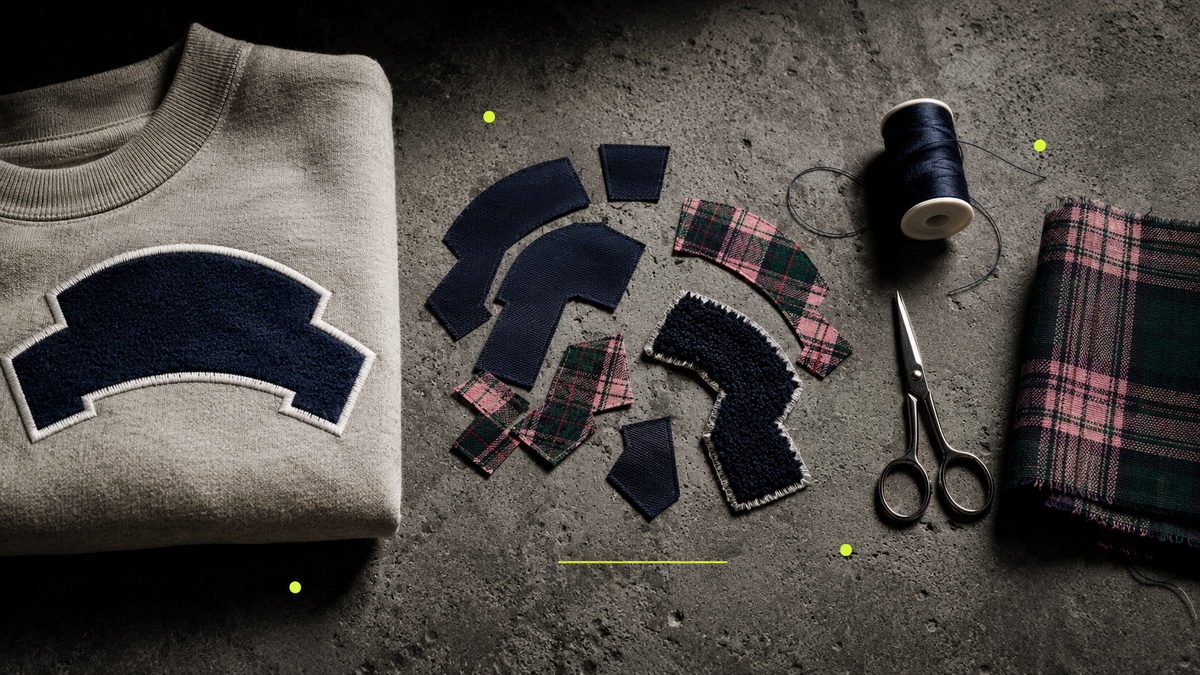
Arched varsity lettering across the chest is the single most recognisable detail in collegiate apparel — and the difference between a piece that looks vintage-authentic and one that looks like a cheap print comes down to how that lettering is actually applied. Applique is a construction process, not a print. Here's how it's made, from the factory floor.
Applique means cutting letters from fabric and stitching them onto the garment. Tackle twill (flat twill or felt letters with satin-stitch outline) is the classic varsity look. Chenille is the fuzzy, raised letterman-jacket patch. Embroidery stitches the letter directly in thread. Applique costs more than printing but reads far more premium — and it's what makes a collegiate piece feel authentic.
The three main methods
Tackle twill
Letters cut from twill or felt, laid on the garment and edged with a dense satin or zigzag stitch. Crisp, flat and durable — the classic arched varsity front.
Chenille
Fuzzy, raised pile letters (the letterman patch). Warm, tactile and highly retro — usually applied as a pre-made patch with a felt backing and merrow edge.
Direct embroidery
The letter is stitched entirely in thread. Best for smaller text and logos; on large letters it gets heavy, stiff and expensive.
Print (for contrast)
Screen or puff print is cheapest and lightest, but it sits on the fabric rather than being built into it — it reads less premium and wears differently.
How tackle twill is actually made
The process is more involved than it looks, which is why it prices higher:
- Digitising: your artwork is converted into a cutting file and a stitch file — arch, spacing and letter width are all set here.
- Cutting: letters are laser- or die-cut from twill, felt or a patterned fabric.
- Placement: letters are heat-tacked into position on the panel, before the garment is fully assembled where possible.
- Stitching: a satin or zigzag stitch runs the full perimeter of every letter — this is the labour-heavy step.
- Finishing: backing is trimmed, and the inside is checked for a clean, non-scratchy face.
A double-layer tackle twill (a slightly larger under-letter creating a contrast outline) is what gives that classic two-tone collegiate edge — and it doubles the cutting and stitching work.
Materials — where the character comes from
The fabric you cut the letters from changes the whole personality of the piece:
- Poly twill: the standard — crisp edges, strong colour, holds up to washing.
- Wool-blend felt: a softer, more vintage matte look, classic for letterman styles.
- Patterned fabric: gingham, plaid/tartan or striped fabric cut into letters — a distinctive preppy detail that instantly differentiates a drop.
- Chenille: raised pile for maximum retro texture.
Spec details that decide the result
- Arch and letter spacing: the curve of the arch is the signature of the look — it should be drawn deliberately, not auto-warped.
- Outline width: a thicker contrast outline reads bolder and more vintage.
- Placement and size: chest width, drop from the collar, and how it sits relative to a mock or crew neckline.
- Backing: the right interlining keeps the applique flat and stops the fabric puckering after wash.
- Hand feel: a clean inside finish matters as much as the outside on a premium piece.
For varsity jacket projects, include lettering placement, panel construction and lining requirements in your custom varsity jacket manufacturing brief.
Cost & time — what to expect
Applique is priced by labour and layers, not by ink colour. A single-layer tackle twill word costs more than a screen print; a double-layer outlined arch costs more again; chenille patches add patch-making on top. Large lettering also adds sewing time per piece, which is why applique is usually reserved for the hero style in a drop rather than every SKU. It also adds a little to lead time, because letters are cut and applied before final assembly. The trade-off is a garment that can carry a much higher retail price — which is exactly why collegiate brands keep choosing it.
Develop your applique
We do tackle twill, chenille and embroidered lettering in-house, developed to your artwork and confirmed on a sample before bulk. See our custom sweatshirt manufacturer page, or our private label clothing manufacturer page for full-brand programs. Your artwork stays yours — we run private-label production with IP protection.
Applique lettering FAQ
What is tackle twill?
Tackle twill is applique where letters are cut from twill or felt fabric, placed on the garment and edged with a dense satin stitch. It's the classic varsity lettering method — crisp, flat and durable.
Tackle twill vs chenille — what's the difference?
Tackle twill is flat cut fabric with a stitched outline. Chenille is a raised, fuzzy pile patch (the letterman look). Chenille is more textured and retro; tackle twill is cleaner and more versatile.
Is applique more expensive than printing?
Yes. Applique is priced by labour and layers — cutting, placing and stitching every letter. It costs more than a screen print but reads far more premium and is far more durable.
Can you cut letters from plaid or gingham fabric?
Yes. Patterned applique — plaid, tartan, gingham or stripe cut into lettering — is a distinctive preppy detail and one of the easiest ways to differentiate a drop.
What's the MOQ for applique styles?
MOQ starts from 50 pcs per style. We confirm the digitised artwork, arch and outline on a physical sample before bulk, and the sample fee is deductible from your first bulk order.