The varsity jacket — letterman, baseball jacket, call it what you like — is the anchor piece of collegiate apparel. It's also the most construction-heavy garment most brands will ever order: a jacket with two different shell materials, ribbed trims, a snap placket, a lining and applied lettering has far more going on than a sweatshirt. Here's how it's actually built, and what you need to decide before it can be quoted.
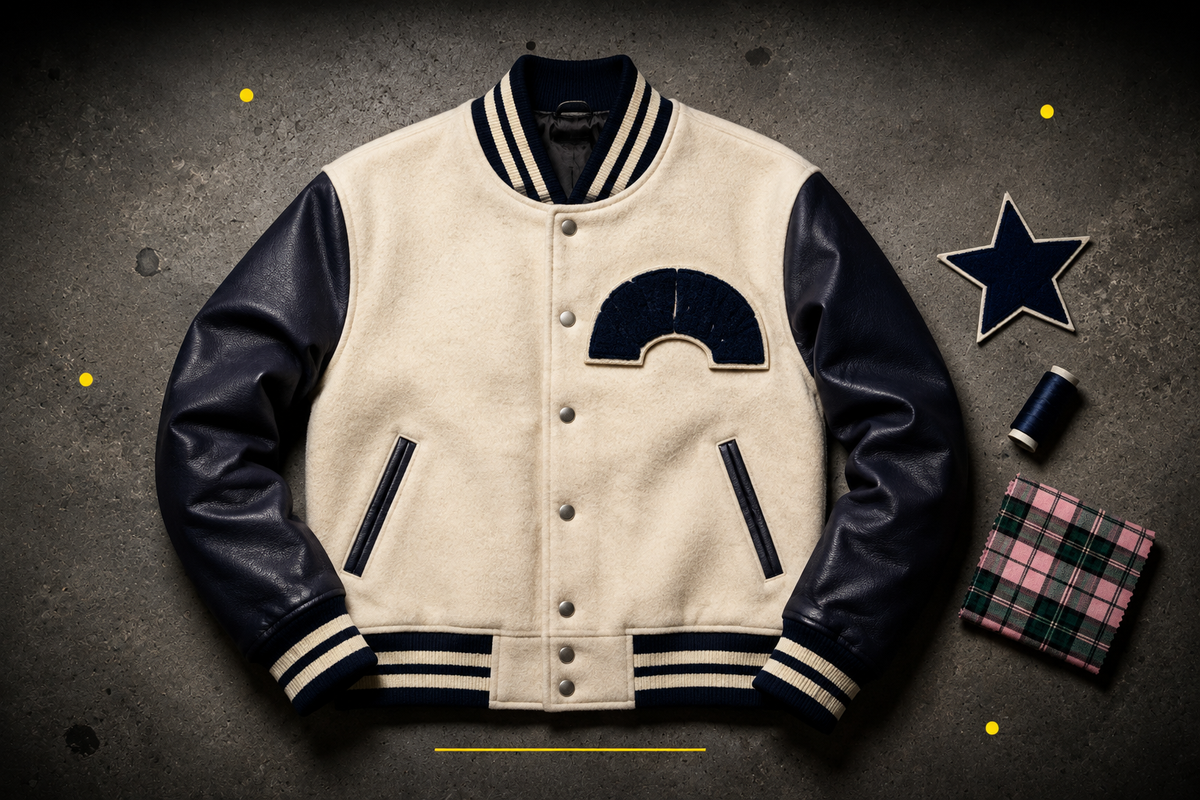
A classic varsity jacket is a wool-blend melton body with leather or PU sleeves, ribbed collar, cuffs and hem, a snap-button placket, a quilted or taffeta lining, and chenille or twill lettering on the chest, back and sleeves. All-fleece and all-nylon versions exist too. It's a multi-component build, so expect a longer lead time than knitwear.
The shell — what the body and sleeves are made of
Melton wool body
The classic. A dense, felted wool-blend that holds structure and has the authentic vintage hand. Typically a wool/poly blend for durability and price.
Leather or PU sleeves
The signature contrast. Genuine leather is premium and heavy; PU/faux leather is lighter, cheaper and far easier on MOQ and consistency.
All-fleece version
A heavyweight brushed fleece varsity — softer, cheaper, more wearable year-round. Increasingly the volume seller for streetwear brands.
Nylon / satin version
Lightweight bomber-style varsity for transitional seasons and a sportier look.
Trims and construction — where the cost sits
The details are what separate an authentic varsity from a costume version:
- Ribbing: striped or solid rib at the collar, cuffs and hem. Stripe combination is a core brand decision — it's the first thing people read as "varsity".
- Placket: snap buttons are the classic closure; a zip reads more modern and sporty.
- Pockets: welt or slash side pockets, sometimes with a leather trim; inner pocket optional.
- Lining: quilted lining for warmth and structure, or plain taffeta for a lighter piece. This drives both cost and the season it sells in.
- Fit: classic boxy, or the oversized drop-shoulder cut most streetwear brands want now.
Before approving a sample, standardise the points of measure and grade rules using our custom varsity jacket sizing and measurements guide.
Lettering — the whole point of the jacket
A varsity jacket is a canvas for applied lettering, and the placement conventions are part of the look: a large chest letter or wordmark, a back wordmark or number, and sleeve patches or year numbers. The methods:
- Chenille: the raised, fuzzy patch letters that define the letterman look — usually made as a patch with felt backing and merrow edge, then applied.
- Tackle twill: flat cut fabric letters with a satin-stitch outline. Crisper, and a double layer gives the contrast outline.
- Embroidery: best for smaller text, sleeve details and logos.
See our guide to applique lettering for how each method is made and what drives its cost. On jackets, lettering is applied to the panel before assembly wherever possible, which is part of why changes are expensive once production starts.
Artwork & permissions
School names, Greek letters, crests and team marks are frequently protected trademarks. You supply the artwork and confirm you hold the rights to use it; we produce to what you provide. Clear this before production — it's the most common avoidable problem in this category.
Lead time & MOQ — plan differently than for knitwear
A varsity jacket is a cut-and-sew outerwear piece with multiple materials, so it behaves differently from a sweatshirt order:
- Longer development: more components to source (melton, sleeves, ribbing, snaps, lining) and more to confirm on a sample.
- Longer production: more construction steps per unit, plus applied lettering.
- Season matters: if you're selling for autumn/winter, work backwards and start development months ahead — outerwear is where late starts hurt most.
- MOQ from 50 pcs per style, with colour and size splits — realistic for a chapter, a team or a first brand drop.
We produce custom varsity and letterman jackets with chenille and twill lettering, developed to your artwork and confirmed on a sample before bulk. See our custom jacket manufacturer page, or our low MOQ clothing manufacturer page for chapter- and team-sized runs. Building a full collegiate range? Pair it with chapter merch in matching colours.
Varsity jacket FAQ
What is a varsity jacket made of?
Classically a wool-blend melton body with leather or PU sleeves, ribbed collar, cuffs and hem, a snap placket and a quilted or taffeta lining. All-fleece and nylon versions are also common.
Leather or PU sleeves — which should I choose?
Genuine leather is more premium and heavier, with higher cost and stricter minimums. PU is lighter, more consistent and far easier on price and MOQ, which is why most brand programs use it.
Chenille or twill lettering?
Chenille is the raised, fuzzy classic letterman patch. Tackle twill is flat cut fabric with a stitched outline — crisper and more versatile. Many jackets use chenille on the chest and twill or embroidery on the sleeves.
What's the MOQ and lead time?
MOQ starts from 50 pcs per style. Lead time is longer than knitwear because of the multi-component build and applied lettering — start development early, especially for an autumn/winter drop.
Can you match a reference jacket?
Yes. Send a reference or tech pack and we match the shell materials, ribbing, placket, lining and lettering, then confirm on a physical sample before bulk.