
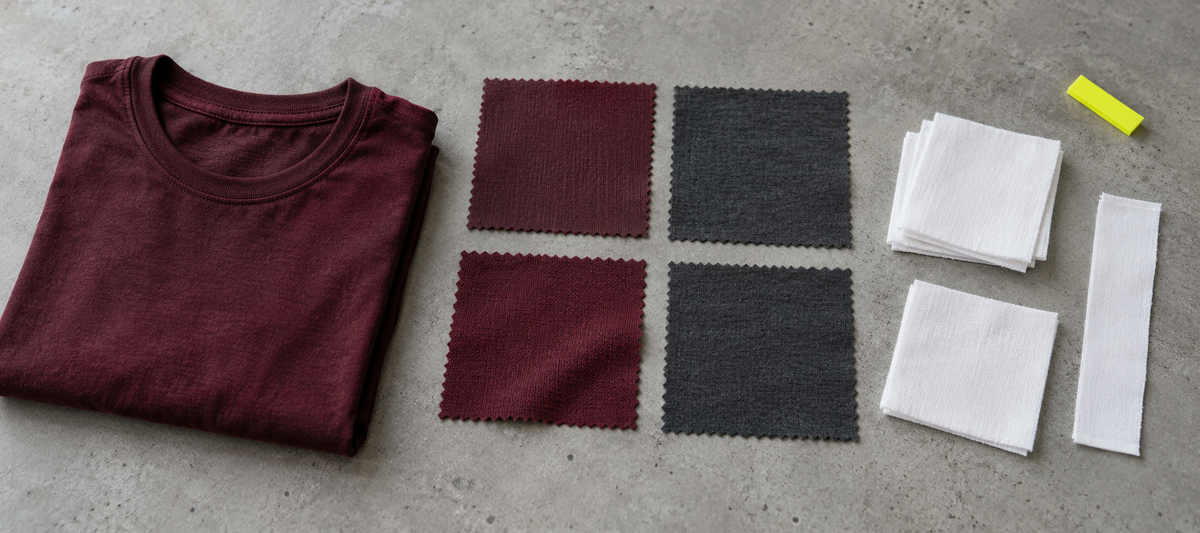
Garment colorfastness testing checks how a material's color changes or transfers under specified conditions. For a clothing brand, the useful approval record identifies the sample and color lot, separates washing from dry and wet rubbing, and compares each result with requirements agreed before testing.
A navy tee can still look navy while leaving color on a pale garment. A washed hoodie can match its approved shade at delivery but change unevenly during care. These are different questions, and a single statement such as “colorfastness passed” does not tell a buyer which one was checked.
This guide helps brands prepare a test brief and use the findings in garment development. It focuses on washing and rubbing; the complete test plan should reflect the product's intended use. The objective is a clear production decision supported by identifiable samples and results.
1. Separate color change from staining
Color change
What happened to the tested material's own color? Compare its appearance before and after the specified exposure. Record the result separately from changes in dimensions or surface damage.
Staining
Did color transfer onto another material? The receiving material can show a problem even when the original garment appears little changed. Identify what was assessed and under which conditions.
AATCC's color evaluation overview identifies separate procedures for evaluating color change and staining. Keep those outcomes distinct in your report review: a favorable result for one does not automatically approve the other.
A shade approval answers another question: whether the submitted color or print matches the agreed appearance. Our lab dips and strike-offs guide explains that development stage. Signing a color swatch does not establish its resistance to washing or rubbing.
2. Specify washing, dry rubbing and wet rubbing separately
AATCC TM61 addresses accelerated laundering evaluation. Its public summary describes controlled conditions intended to approximate certain laundering effects. Ask the laboratory which option fits your brief; do not convert an accelerated result into an unrestricted promise about every customer's washing machine or care routine.
AATCC TM8 addresses color transfer caused by rubbing, often called crocking, and includes dry and wet test conditions. Review those results individually. A wash result cannot replace rubbing evidence, and a dry rubbing result cannot stand in for a wet one.
These are method scopes, not instructions for performing the tests. Confirm the complete method, edition, selected conditions and applicability with the test provider. TM8's public scope notes limitations for very small printed areas; show the laboratory your artwork before assuming the same method suits every motif.
For products facing other exposures, ask whether additional checks are needed. AATCC lists perspiration, water and light evaluations separately. Washing and rubbing alone do not establish performance under all conditions.
3. Build the sample plan around the actual design
Use the garment's materials and construction to decide what needs attention. The examples below are planning prompts, not predictions that a particular color or technique will fail.
| Design detail | Question for the test plan | Record to keep |
|---|---|---|
| Dark and light panels | Does the plan address transfer onto the lighter component? | Panel colors, material references and tested combination. |
| Body fabric and rib | Are both materials represented, including their appearance together? | Separate fabric and rib lot references. |
| Print and embroidery | Which colored areas and adjacent materials need evaluation? | Artwork revision, print process, thread and base fabric. |
| Washed or garment-dyed finish | What appearance is intentional, and what later change is acceptable? | Approved finished reference and agreed care evaluation. |
Give the laboratory both the material information and photographs of the construction. Agree whether separate components, the finished combination, or both are needed. Do not use evidence from an undecorated fabric swatch to approve every feature of a printed, embroidered garment.
For a faded aesthetic, establish the intended factory finish first, using the garment washes and dyes guide for development context. Then assess subsequent care against an agreed reference. “Vintage” is not a complete acceptance criterion.
4. Send a test brief before sending samples
A concise written brief prevents the factory, brand and test provider from working to different expectations. Confirm the following before testing begins:
- Sample identity: style, sample ID, development stage, fabric composition, color, dye or finish lot, decoration and specification revision.
- Coverage: colors, components and combinations to test, with the sampling arrangement agreed for the order.
- Procedure: method and edition, selected options, any pretreatment, and the outcomes to report separately.
- Care context: intended washing and drying instructions, product use and any required buyer protocol.
- Acceptance: required grades or other criteria for each outcome, applicable evaluation procedure, and who approves the result.
- Delivery: required report details, sample return arrangements, cost and timing confirmed with the provider.
Do not use a universal “grade 4” rule for every product or test. Requirements must be appropriate to the buyer's specification and selected method. If a requirement is missing, agree it before testing instead of choosing a convenient limit after seeing the result.
A simple sample wash can help identify visible issues during development. Label it as a development observation unless the complete specified method was followed. Record the actual conditions, sample identity and photographs without assigning an unsupported laboratory grade.
5. Read the report beyond the word “pass”
Match the report's sample description to the submitted material, color and finish. Check the method, edition, selected conditions, individual results and any deviations. Confirm that the stated pass decision uses your agreed criteria. Resolve missing identifiers or unclear coverage with the test provider before using the report for approval.
A report supports conclusions about its tested samples and stated scope. It does not automatically cover another color, a replacement fabric lot, a revised print or the entire shipment. If several materials were combined in one submission, ask which result belongs to which component.
Keep color performance separate from other wash findings. Use the garment shrinkage testing guide for dimensions and the related sample record. Print cracking, peeling, seam distortion and changes in hand feel also need their own observations; a colorfastness result alone does not approve them.
6. Carry the decision into PP and bulk production
Record whether the sample is approved, held for clarification or rejected, along with the decision owner and date. If a result misses the agreed requirement, identify the affected material or process with the supplier, document the proposed correction and agree what must be retested. Keep the revised sample reference attached to the new result.
Include the accepted evidence in the physical sample and PP approval record. A change in material, color recipe, finish or decoration should trigger a review of which approvals remain applicable.
Carry those requirements into the bulk quality-control brief. Shipment inspection and performance testing serve different decisions; an AQL inspection result is not a replacement for the specified colorfastness evidence.
Frequently asked questions
What is garment colorfastness testing?
It evaluates color change or transfer under specified exposures. Identify the method, sample and conditions when discussing a result; “colorfast” without that context is incomplete.
What is the difference between washing and rubbing colorfastness?
Washing evaluates behavior under a laundering procedure. Rubbing checks transfer caused by contact under controlled rubbing conditions. Review dry and wet rubbing separately from washing.
Does an approved lab dip prove colorfastness?
No. Shade approval establishes the agreed appearance. Performance needs separate evidence for the relevant material, process and test conditions.
What colorfastness grade should a clothing brand require?
Agree criteria for each relevant outcome with the buyer and test provider before testing. The product, selected method and intended use matter; one grade is not an automatic limit for all clothing.
Can I use one report for every color in an order?
Do not assume so. Check the report's sample scope and agree coverage for the order's colors and lots. A result from one submitted sample does not establish the performance of every variation.
Is a factory sample wash the same as a laboratory colorfastness test?
Only describe a check as following a specified method when that complete method was followed and documented. Development observations are useful, but they do not automatically provide standardized grades.
Plan color approval with your garment development
When planning private label T-shirts or custom hoodies, send your color references, material details, intended care and buyer requirements. Share your project brief with Lesstell so sample coverage and any testing arrangements can be confirmed before production.