
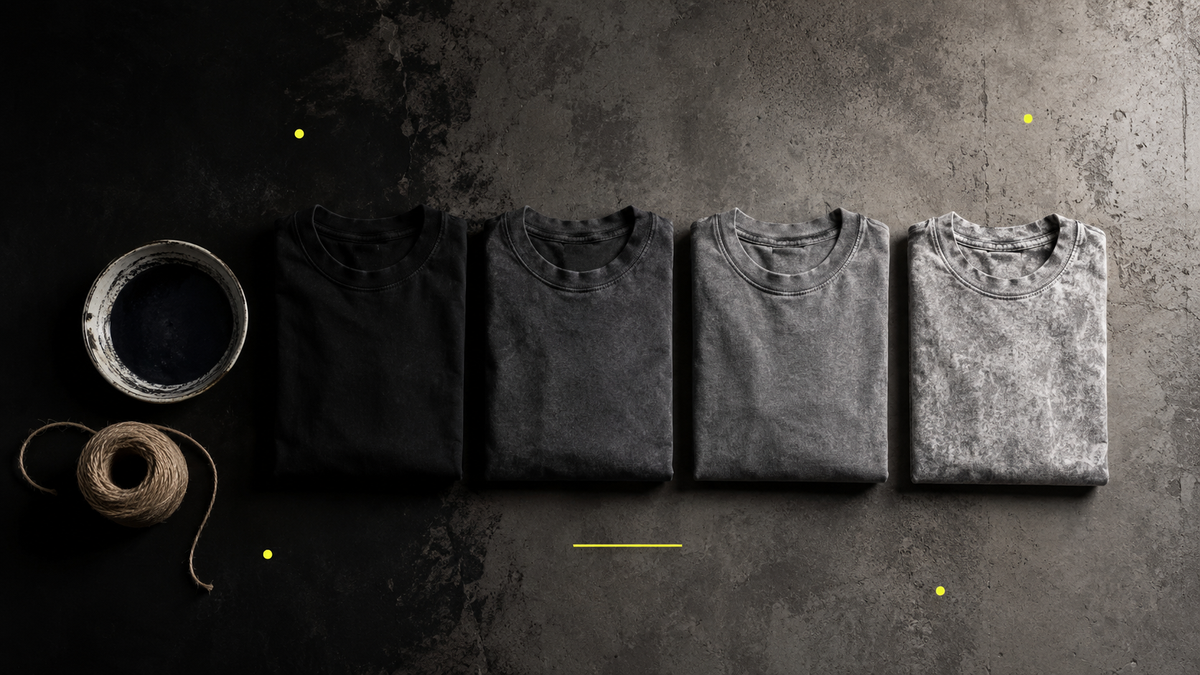
The faded, broken-in, "already lived-in" look is one of the clearest tells of a premium streetwear piece — and it almost never comes from the fabric alone. It comes from how the garment is dyed and washed after it's made. Get this right and a blank tee reads vintage and expensive; get it wrong and it reads cheap. Here's how washes and dyes work, from the factory side.
Dye sets the colour and how it will fade: pigment and garment dye give a soft, worn, vintage look; reactive dye gives clean, saturated, wash-fast colour. Washes — enzyme, stone, acid, mineral — then soften the hand and add character. The lived-in look is dye + wash working together, added after the garment is sewn.
Dyeing: where the colour and the fade come from
Reactive dye
Bonds with the fibre for clean, saturated, wash-fast colour. The standard for solid, long-lasting shades that don't fade much.
Pigment dye
Sits more on the surface and fades softly with wear and washing — that lived-in, sun-faded vintage tone streetwear loves.
Garment dye
The finished garment is dyed (not the yarn or fabric), giving tonal, slightly uneven, characterful colour and a soft hand.
Overdye & tie-dye
Dyeing over an existing colour, or resist patterns, for washed, one-of-a-kind and gradient effects.
Pigment and garment dye are the go-to for a vintage, faded aesthetic; reactive dye is the choice when you want a colour to stay clean and consistent drop after drop.
Washes: softening and adding character
Washing happens after sewing and changes both the feel and the look:
- Enzyme wash: softens the hand and gives a smooth, slightly faded surface — the most common premium softener.
- Stone wash: tumbled with abrasive stones (or enzymes) for a worn, textured, vintage effect — a denim classic that also works on heavy jersey.
- Acid / mineral wash: creates high-contrast, marbled, faded patterns for a bolder retro look.
- Garment / pigment wash: pulls colour down into a soft, tonal, broken-in finish.
- Silicone / softener wash: adds a luxe, smooth, heavy drape without changing colour much.
How washes affect fabric, fit and cost
Washing isn't free of trade-offs. Heavy washes can shrink and relax the garment, so the pattern has to be cut oversized to finish at the right size — which is why wash and fit have to be planned together, not bolted on at the end. Aggressive washes also add process, time and cost, and can affect print and embroidery, so decoration has to be matched to the wash. A good factory samples the wash on your actual fabric first, because the same wash lands differently on 180 GSM jersey than on 400 GSM fleece.
Matching wash and decoration
Prints and washes interact. A vintage soft-hand print (like a faded plastisol or water-based print) pairs naturally with a garment or pigment wash; a crisp, high-contrast print may fight a heavy distressing wash. Puff, 3D and embroidery each behave differently through washing. The rule: decide the wash and the decoration together, and confirm both on one sample before bulk.
Develop your wash
The faded look is a process, and the process has to be dialled in on your fabric. We develop dyes and washes to the exact tone and hand you want, confirmed on a sample before bulk. See our custom t-shirt manufacturer page, or our streetwear manufacturer page to spec a washed, vintage-look program.
Washes & dyes FAQ
What dye gives the faded vintage look?
Pigment and garment dyeing fade softly with wear for that lived-in tone. Reactive dye stays clean and saturated, so it's the choice when you don't want fading.
What's the difference between garment dye and pigment dye?
Garment dye means the finished garment is dyed, giving tonal, characterful colour. Pigment dye sits more on the surface and fades softly. They're often combined for a vintage effect.
Will washing change the size of my garment?
Yes — heavy washes can shrink and relax fabric, so the pattern is cut oversized to finish at the right measurements. Wash and fit have to be planned together.
Can I put a print on a washed garment?
Yes, but the print and wash must be matched. Some prints pair beautifully with a soft wash; heavy distressing can affect others. We confirm both on one sample.
Can you match a reference wash?
Yes. Send a reference garment and we sample the dye and wash on your fabric and GSM to match the tone and hand before bulk. MOQ from 50 pcs per style.