
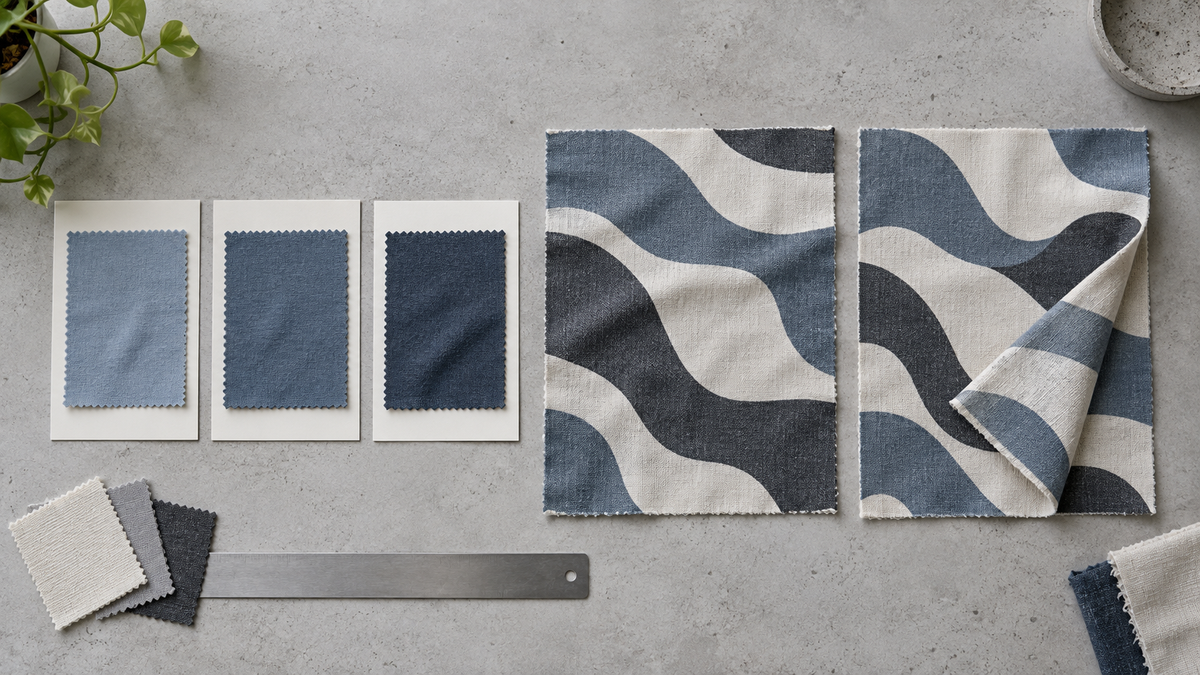
A lab dip is a small dyed fabric sample used to assess a proposed solid color. A strike-off is a printed trial used to review artwork and its appearance on fabric. Neither replaces a complete garment sample: record exactly what each approval covers before moving to the next development stage.
For a clothing brand, “color approved” should identify a physical sample, a material and a decision. Otherwise, a supplier may have approval for the hoodie fabric while the chest print, rib or bulk fabric still needs review.
This guide explains lab dips vs strike-offs and offers a practical approval record for apparel development. Agree the specific process with your garment manufacturer and the relevant dyeing or printing supplier.
1. Lab dip, strike-off and PP sample: what each checks
Lab dip
A small dye trial for a specified fabric and color. Its main purpose is evaluating the proposed dyed shade against the agreed reference. It does not establish garment fit, print quality or acceptance of every bulk fabric lot.
Strike-off
A physical print trial on fabric. Review print colors, artwork detail, scale and the result of the proposed printing method. An all-over pattern may also require repeat alignment checks. Final placement on a garment needs a garment-level review.
PP sample
A pre-production garment used for the agreed final review of materials, construction, measurements, trims and decoration. Link it to the approved color and artwork references, and document any differences from the intended production specification.
Bulk fabric submission
Material taken from production for the agreed bulk review. Identify its lot or roll and compare it with the approved reference. A development sample and a bulk submission serve different decisions.
CottonWorks describes lab dipping as color development on a specified substrate, with evaluation against a standard and possible adjustments when scaling to production. Keep that material reference attached to your approval.
2. Send a usable color brief before requesting samples
A color name such as “washed black” leaves room for interpretation. Give the supplier a physical reference or an agreed color standard, including its full code and reference system where applicable. Identify the fabric and whether the target describes the material before or after the intended finishing process.
- Material: fabric reference, composition, construction, weight and intended finish.
- Target: the physical swatch or color standard that governs the decision.
- Components: which body fabrics, rib, threads or trims must coordinate.
- Artwork: the correct file revision, dimensions, color references and proposed print method.
- Review conditions: the agreed lighting, evaluation method and project-specific acceptance criteria.
- Decision owner: who will consolidate comments and authorize approval.
Resolve the fabric choice first where possible. Our streetwear fabric guide explains construction and finish choices that belong in the brief.
3. Review a lab dip against the intended material
Check the submission identity before judging color: does its fabric reference match the request, and is the sample presented in the agreed finished state? If the supplier used a substitute material, record that limitation and establish what still needs review on the intended fabric.
Compare the submission with the governing reference under the agreed lighting. Assess companion materials together when they form one garment or coordinated set. A body-fabric approval should not silently become approval for a separate rib or trim.
Colors can match under one lighting condition and separate under another. This is metamerism; X-Rite's explanation shows why a single casual viewing condition can be misleading. Agree which conditions matter for the product instead of relying on a phone photo.
If numerical color measurement is part of the project, ask the supplier to identify the measurement method and acceptance criteria alongside the result. A bare “pass” or isolated color-difference number is not a complete approval record.
4. Review a strike-off as a print, not just a color swatch
Start with the correct artwork revision, base fabric and proposed production method. A successful trial on one material is not automatic approval of the same artwork on another. Confirm any relevant finishing steps have been represented in the submitted trial.
CottonWorks' printing process guide explains how fabric preparation and colorant systems affect printing, including differences in fixation and finishing. Your review should reflect the actual method selected for the project.
- Color and coverage: compare the printed result with the approved references and the intended fabric background.
- Detail: inspect fine lines, edges and alignment between colors.
- Scale: check artwork dimensions and, for repeating designs, the repeat size and alignment.
- Hand feel: assess the printed area against the intended garment experience.
- Performance: request the agreed wash or other relevant checks; an attractive appearance alone does not establish durability.
For a placed chest or leg graphic, also approve its position on the garment sample. For embroidery, request a stitch-out rather than treating a printed trial as embroidery approval. See our print and embroidery methods guide when selecting the decoration route.
5. Give comments that identify the next action
Use the supplier's submission ID and revision in every response. Separate the observations from the decision, and distinguish approved items from items requiring a new submission.
For example, a useful print response could be: “Submission B, artwork revision 3: scale and line detail approved. The blue is darker than the supplied physical reference under the agreed viewing conditions. Please revise the color and resubmit. Final garment placement remains open.” This is an illustrative comment format, not a production test result.
Keep one consolidated response per review round. If comments conflict or the fabric or artwork changes, resolve the governing reference before another trial is made. Date and retain the approved physical sample so the brand and supplier can trace the final decision.
6. Carry approvals into PP and bulk review
Build a short record connecting each approval to the garment specification. The following fields make a useful starting point:
- Style, component and colorway.
- Fabric reference and artwork revision, where relevant.
- Submission ID and the physical standard used for comparison.
- Viewing conditions and agreed evaluation criteria.
- Approved, revise and resubmit, or clearly defined conditional status.
- Approver, decision date and retained sample location.
- Outstanding checks and the next stage explicitly authorized.
When reviewing the PP garment, confirm that the intended color and print references are carried through. If a material, process or artwork changes, agree which approvals must be reopened. Use the sample-to-PP guide for the wider garment review.
For production, agree how fabric lots and print output will be compared with the retained standards. Keep color approval, required performance results and authorization to proceed identifiable as separate decisions. The garment QC and AQL guide explains the broader inspection context.
Frequently asked questions
What is the difference between a lab dip and a strike-off?
A lab dip assesses a dyed shade on a specified fabric. A strike-off evaluates a printed design on fabric, including its colors, detail and scale. Choose the submission that matches the decision being made.
Can I approve fabric color from a phone photo?
Use photos to discuss progress and identify submissions. For a physical color decision, compare the actual sample with the agreed reference under the agreed conditions; camera and screen appearance should not become the governing standard.
Does every clothing order need a new lab dip?
Not necessarily. Custom dye development and an order using an existing stock color have different needs. For stock fabric, identify the actual material and lot to be reviewed instead of assuming an old swatch represents current stock.
Does an approved strike-off confirm wash durability?
Only if the required performance checks were carried out and accepted as part of the documented approval. Visual acceptance of a print does not, by itself, confirm its behavior after washing.
Is there one color tolerance for every fabric?
No single number should be assumed to govern every project. Agree the evaluation method, reference, relevant conditions and acceptance criteria with the supplier before making pass-or-fail decisions.
Does lab dip approval authorize bulk garment production?
It authorizes only the scope recorded in the approval. Fit, trims, decoration, PP review, production material checks and other release conditions may still be outstanding.
Prepare your next color-development brief
For a Lesstell OEM or ODM clothing project, send your fabric references, color standards, artwork and intended finish with the garment brief. Contact us to review the development requirements and establish which physical submissions your project needs.