
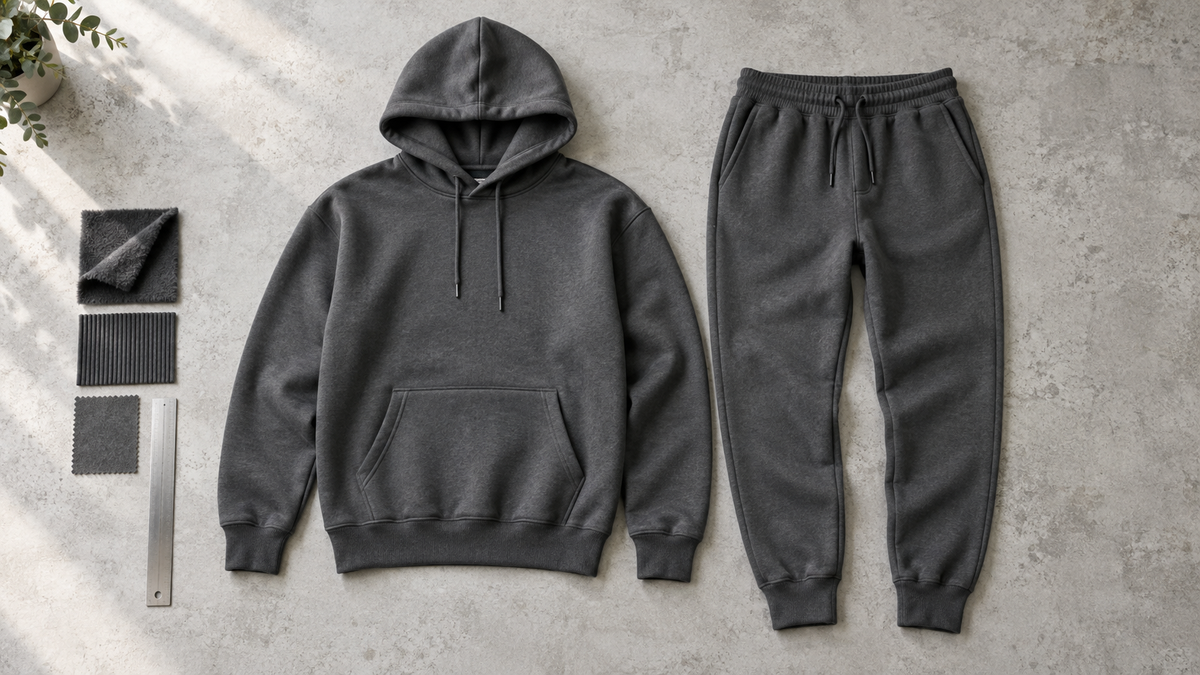
A custom sweatsuit is a coordinated top and bottom developed to work together in fabric, color, fit and branding. For a hoodie-and-jogger set, approve each garment on its own and then review the complete outfit. Matching color names and size labels do not establish that the two pieces will look or fit like a set.
Custom sweatsuit manufacturing connects two product developments. A hoodie can have the right proportions and a jogger can fit well, yet the outfit can still feel unbalanced when worn together. The most useful development brief explains the relationship between the pieces as clearly as it describes each garment.
This guide focuses on adult knitted hoodie-and-jogger sets for clothing brands, from the first coordinated specification to physical sample and pre-production approval.
1. Define how the set will be sold and worn
Start with the intended outfit: a relaxed everyday set, an oversized streetwear silhouette or a closer-fitting coordinated look. Specify whether the hoodie is pullover or zip-front and whether the bottom has a cuffed or open hem.
Then settle the selling format. A fixed-size bundle, mix-and-match sizes and separately sold pieces create different quantity and packing requirements. Keep a separate style code, measurement chart and bill of materials for each component, with a shared set reference connecting them.
- Fixed bundle: record which top and bottom sizes belong together and how each complete set is packed.
- Mix-and-match: specify top and bottom quantities separately; customer size combinations may not follow an equal split.
- Separates: identify which colors and finishes must remain compatible when shoppers purchase the pieces at different times.
Ask the manufacturer to state quantities and minimums in pieces and complete sets where relevant. Do not assume a minimum quoted for one garment also applies to a two-piece bundle.
2. Build a shared fabric specification
For a visually matching set, begin with the same intended body fabric specification for both garments: fiber composition, knit construction, weight, surface and finishing route. A weight number alone is not a complete fabric description. Compare physical swatches for face texture, drape and hand feel before selecting the fabric.
French terry and brushed fleece produce different inside surfaces and wearing experiences. Use the French terry and fleece guide to narrow the options, then assess the selected fabric against the actual silhouettes.
Shared appearance
Record the body fabric reference, color standard and intended wash or finish. If the top and bottom intentionally use different weights or constructions, review them together and document the accepted contrast.
Component performance
Specify hoodie rib, jogger cuffs, waistband elastic, pocket bags and drawcords individually. Components should support the design and function; they do not all need the same composition as the body fabric.
3. Approve color across the complete outfit
Place the hoodie body, jogger body, rib and visible trims next to one another. Check the intended finished appearance, including any garment wash, instead of approving each component in isolation.
Ask how fabric lots will be identified and allocated across the two styles. Using a shared lot where feasible can simplify coordination, but it does not remove the need to compare the finished pieces. For repeat orders, retain the approved physical reference and review the new production against it.
Lighting also matters. Two materials can look alike under one light and differ under another, a phenomenon called metamerism. X-Rite explains this color-matching issue. Agree the viewing conditions with the supplier and include a side-by-side outfit review in the approval process.
4. Fit the hoodie and joggers as one silhouette
Develop the individual measurements first, then try the pieces on together. A cropped hoodie with a high-rise jogger creates a different waist relationship from a longer hoodie with a lower rise. Changing one piece may require another outfit review even if the other pattern is unchanged.
- Standing: examine hoodie length against the waistband, overall volume and the balance between sleeves and trouser legs.
- Sitting: check waistband comfort, seat ease, pocket behavior and how the hoodie gathers at the waist.
- Moving: review reach, bending and walking, including cuffs, hem openings and drawcord interference.
- Across sizes: assess agreed representative size combinations rather than assuming a satisfactory base-size outfit proves the full range.
For the detailed bottom specification, see the custom joggers manufacturing guide. Use size set samples to review the agreed graded range after the base patterns are established.
5. Coordinate decoration and review washed samples
Give the hoodie and joggers separate artwork placements, each measured from a defined garment reference point. A shared logo does not require identical artwork dimensions: a chest position and a thigh position need their own visual review. Specify the print or embroidery method, artwork revision, colors and placement for each piece.
Review the decorated outfit as well as the individual artwork samples. Check whether a pocket, seam, waistband or fold changes the appearance of a design. If placement or scale changes across sizes, record that rule in the specification.
Include agreed laundering checks before final approval. CottonWorks explains that dimensional change can affect fit, seams and the relationship between body fabric and trims. Its shrinkage guidance supports setting specifications around the actual fabric and process.
Compare the washed top and bottom together: does the hoodie still meet the intended waist position, do the jogger legs hang correctly, and do the colors and decoration remain acceptable? Record the care procedure and agreed acceptance criteria with the results.
6. Approve both components before releasing the set
A useful approval record names the hoodie revision, jogger revision and shared set reference. It should make clear which decisions are approved and which remain open. If the hoodie passes but the joggers need changes, mark that split explicitly.
- Materials: body fabrics, color references, rib and visible trims.
- Fit: individual measurements and the complete outfit review.
- Decoration: artwork, method, color, size and placement on each garment.
- Finished performance: agreed wash, appearance and other relevant quality checks.
- Packing: size pairing, labels, quantities and bundle or separate packing instructions.
- Release: the approved physical samples, remaining actions and who can authorize the next production stage.
This is a planning checklist to adapt to your project. Follow the agreed physical sample and PP approval process; a color or artwork approval alone does not release the complete order.
Frequently asked questions
What is a custom sweatsuit?
It is a coordinated sweatshirt or hoodie and sweatpant set developed for a brand. This guide covers knitted hoodies and joggers, with shared decisions on fabric, color, fit and decoration.
Should the hoodie and joggers use the same fabric?
A shared body fabric specification is a practical starting point for a matching appearance. Different weights or constructions can be intentional, but the combination should be reviewed as a complete outfit before approval.
Can buyers choose different top and bottom sizes?
That depends on the brand's selling model and the agreed production and packing plan. Specify quantities for each component and confirm permitted combinations before ordering.
Does the same color reference mean both pieces will match?
No. Compare the actual finished fabrics, rib and trims together. Keep an approved physical reference and agree how new lots and repeat orders will be checked.
Is one approved hoodie sample enough for a sweatsuit order?
No. The joggers also need their agreed fit and construction reviews, followed by a complete outfit assessment. Document approval for both components and any remaining conditions.
What should I send for a custom sweatsuit inquiry?
Send designs for both pieces, intended fit, fabric and color references, size ranges, quantities by component, decoration files, packing preferences and target delivery date. Include existing tech packs or physical references when available.
Plan your matching hoodie-and-jogger set
Lesstell develops custom clothing for brands. Explore our custom hoodie manufacturing and custom jogger manufacturing services, then send your set brief for a project review. Include both components so fabric, sampling and packing requirements can be considered together.