
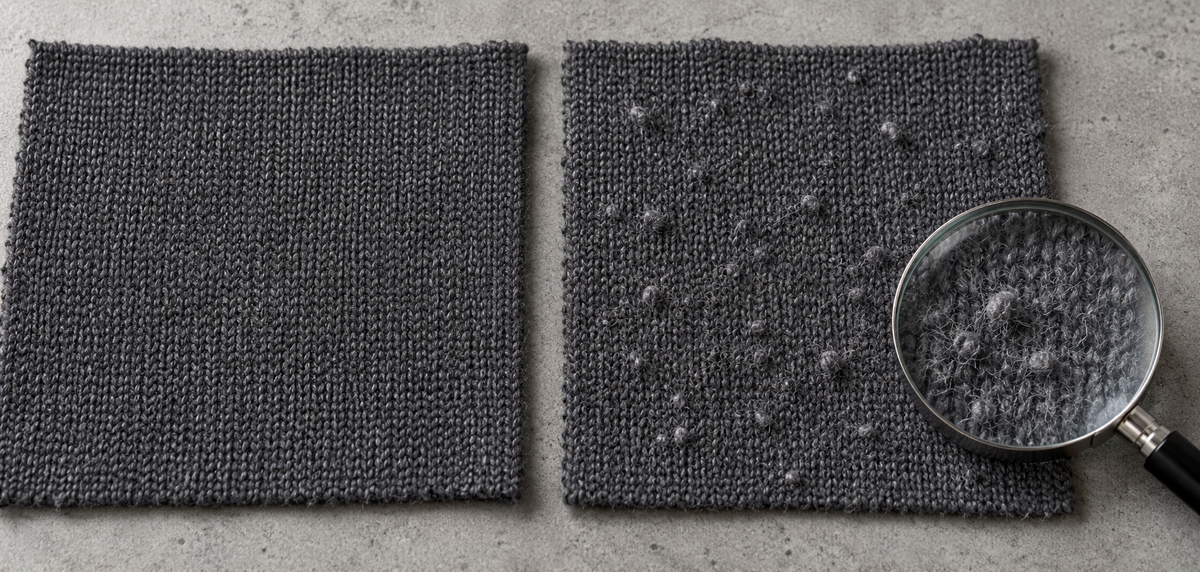
A fabric pilling test evaluates how readily small fiber balls form on a fabric surface under specified test conditions. A fabric pilling result is useful only when the sample, method, exposure and grading conditions are clear. Review those details before comparing scores, then agree what the evidence means for your clothing project. A grade alone does not establish wear life or approve an entire production order.
Suppose two suppliers send reports showing grade 4. One tested an unfinished development swatch; the other tested finished fabric after laundering. The numbers look comparable, but the materials and conditions may answer different questions. For a brand developing a sweatshirt, hoodie or tee, report review starts with identifying what was actually tested.
Pilling, fuzzing and matting describe different changes
CottonWorks explains pilling as the formation of small, tangled fiber balls attached to a fabric surface. Fiber characteristics, yarn, construction and finishing can all affect the outcome; GSM or fiber percentage alone cannot settle a purchasing decision.
- Pilling: distinct fiber balls appear on the surface.
- Fuzzing: surface fibers become more raised or disturbed, creating a hairier appearance without necessarily forming distinct balls.
- Matting: the raised fibers of a napped surface lose their original arrangement, changing its appearance.
ISO 12945-4:2020 covers visual assessment of these three changes. For a brushed sweatshirt, ask which surface was examined and which changes were reported. A favorable pilling result should not conceal an unacceptable change in the fleece appearance.
Use our GSM, French terry and fleece guide to describe the intended fabric, then add performance questions to that specification.
Choose a method before comparing results
“Pilling tested” is incomplete. Confirm the method designation, edition and suitability with the testing laboratory. These are different test routes, not interchangeable labels:
- Modified Martindale: ISO 12945-2:2020 addresses surface pilling, fuzzing and matting using the modified Martindale method.
- Pilling box: ISO 12945-1:2020 uses a rotating box apparatus.
- Random tumble: ISO 12945-3:2020 uses a random tumble tester and excludes fabrics that cannot tumble freely. ASTM D3512/D3512M-22 is a separate random tumble standard; naming the apparatus does not identify the complete procedure.
ASTM D4970/D4970M-22(2026) covers Martindale pilling testing, but its public guidance specifically does not recommend the method for acceptance testing because interlaboratory data are unavailable. If used for that purpose, it calls for caution. Do not turn a Martindale score into a universal shipment pass/fail rule.
Where results from different laboratories disagree, ask them to investigate comparability before rejecting material or choosing the better-looking number. Agree the review process with the supplier in advance.
Pilling Rating Scale: How to Read Grades 1–5
ASTM D4970 reports pilling on a visual scale from 5, meaning no pilling, to 1, meaning very severe pilling. The scale describes the tested appearance under that procedure. It is not a percentage score, a lifespan estimate or a promise that a garment will never pill.
There is no single purchasing threshold that this guide can assign to every garment. Establish the relevant assessment stages, outcomes and interpretation with the buyer and laboratory before testing. Keep any agreed target attached to its method and conditions.
A short email saying “grade 4 passed” leaves too much unstated. Request the complete report and supporting sample identification. If photographs are available, they help everyone discuss the same areas, but uncontrolled phone images should not be used to invent a standardized grade.
A practical checklist for reviewing the report
The following is a buyer's review checklist, not a reproduction of a standard's mandatory reporting requirements. Ask the laboratory which details belong in its report and keep the remaining project information with your approval record.
| Check | Information to request | Why it matters |
|---|---|---|
| Sample identity | Fabric reference, composition, construction, color and batch; garment or component reference where relevant. | Connects the result to the material you intend to buy. |
| Production state | Development or bulk material, finishing history, tested face and any agreed pretreatment. | A raw swatch and a finished garment fabric are different submissions. |
| Test provider | Laboratory, report number, test date and any subcontracted work. | Provides a traceable route for clarification. |
| Procedure | Full method and edition, exposure stages, relevant conditions and reported deviations. | Prevents comparison based only on a shared machine name. |
| Assessment | Which surface changes were graded, the rating reference, results at each reported stage and supporting photographs where supplied. | Shows what a numerical result describes. |
| Project decision | Agreed criteria, open questions, decision owner and required follow-up. | Separates the laboratory result from the brand's commercial decision. |
Check that the sample reference on the report matches the submitted swatch and purchasing record. If only a general fabric name appears, resolve the identity before treating the document as evidence for a specific lot. A familiar supplier name is not enough.
Turn findings into a development decision
Before testing: define the question
Decide whether you are comparing fabric options, investigating a finish change or checking a specified production material. Send the laboratory the intended garment use and care plan, then agree the sample coverage. Record who selects and submits the samples so the result's scope is clear.
After testing: resolve the cause, not just the number
For a disappointing result, review the yarn, construction and finishing options with the fabric supplier. Ask what would change, what trade-offs need checking and which revised sample will represent the proposal. Do not silently replace the original report with a better result from an unidentified swatch.
A revised finish also needs review against the intended hand feel and appearance. Keep dimensional behavior in the garment shrinkage testing record and color change or transfer in the colorfastness testing record. Pilling does not answer those questions. Abrasion resistance is another separate property: resistance to surface wear is not the same assessment as the formation of pills.
Before production approval: connect the records
Link the agreed fabric reference and report to the technical pack and physical PP sample. State which material or process changes require further review, who approves them and what happens if the bulk reference differs. Retain the comparison swatch where practical.
Carry the relevant requirements into the quality-control and AQL inspection brief. Visual shipment inspection and laboratory performance testing serve different decisions; neither automatically replaces the other.
Frequently asked questions
What does a fabric pilling test tell a clothing brand?
It describes the submitted material's response to a specified procedure and exposure. Review the sample identity, finish, conditions and assessment before applying the result to a development or purchasing decision.
Is grade 4 always a pass?
No. A grade needs its method, exposure and agreed project criteria. Do not assume the same number means the same outcome across different procedures or laboratories.
Is Martindale pilling the same as Martindale abrasion?
No. Ask for the full standard designation and measured property. A shared equipment name does not make a pilling rating an abrasion-resistance result.
Should fabric be tested before or after washing?
Agree the submission state and any pretreatment with the laboratory. If both states matter to your project, identify them separately rather than combining their results under one sample description.
Does 100% cotton or heavyweight fabric guarantee no pilling?
No. Fiber content and weight do not capture every influence on surface behavior. Review the intended yarn, construction and finish, supported by relevant evidence.
Can one pilling report cover every color and future production batch?
Do not assume that coverage. Identify the represented materials and ask what changes in lot, color processing or finish need additional review or testing.
Bring the test question into the product brief
When discussing a Lesstell clothing project, include the garment type, fabric reference, intended finish and care instructions, plus any existing reports or buyer requirements. Share your development brief so the sample plan and required external testing can be discussed before material approval.