
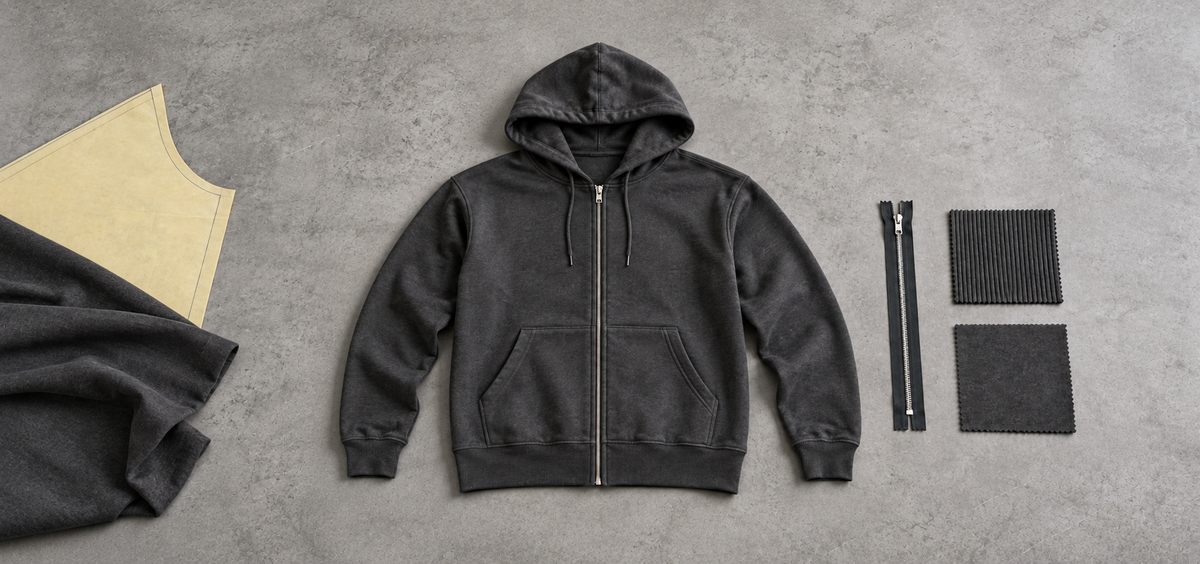
Custom zip-up hoodie manufacturing requires a coordinated specification for the zipper, front opening, pockets and fabric. Choose the opening function and hardware, define how zipper length is measured, then check the assembled hoodie for alignment, smooth operation and appearance after the agreed wash procedure. Approve these details on a physical sample before bulk production.
A zip-up hoodie can fit well through the shoulders and sleeves yet still look unfinished if the front ripples, pocket halves sit at different heights or the zipper catches the facing. Those details deserve their own development review.
This guide covers adult knitted zip-up hoodies for clothing brands. It focuses on the front closure and its construction, from the first specification to pre-production approval.
1. Specify the complete zipper, not just its color
Start with how the garment should open. A full zip-up hoodie needs a separating, open-end zipper. A two-way open-end option also allows opening from the bottom; confirm that this function suits the intended fit and wearing style.
YKK's zipper selection guidance considers function, slider, gauge and finishing details together. Use that approach when discussing a component with its supplier, rather than choosing from a photograph alone.
Opening and slider
Specify one-way or two-way opening, the required slider locking function and puller design. Confirm which side carries the insertion pin from the wearer's perspective.
Chain and finish
Compare metal, coil or molded options in the actual design. Record the supplier's product code, gauge, element finish and tape color; a material name alone leaves important choices open.
Appearance and sourcing
Review a physical component for scale, color and feel. If your design requires a particular brand or finish, name it in the bill of materials and confirm availability before approval.
Keep the approved component reference with the sample. A later change to the puller, slider or chain should trigger another relevant fit and function check.
2. Define zipper length and garment measurements separately
“Front length” can mean the garment's body length, the sewn opening or the zipper's order length. Label each measurement separately and include a sketch showing its start and end points.
The YKK zipper instruction manual, under Zipper Dimension, measures a closed zipper laid flat and uses different endpoints for different constructions. Follow the diagram for the selected component; do not substitute total tape length for its specified zipper length.
- Garment: define the front opening, neckline position and finished hem, including whether measurements include the rib band.
- Component: record the supplier's length convention and required tape extensions.
- Placement: show where the top and bottom hardware sit relative to the hood seam and hem.
- Size range: confirm zipper lengths by garment size or approved size group, rather than automatically repeating the base-size component.
Agree measurement tolerances with the factory and component supplier. A zipper supplier's component tolerance is not automatically the acceptable tolerance for the finished hoodie's front opening or pocket alignment.
3. Match the zipper to the fabric and front construction
Evaluate the selected zipper with the actual body fabric, rib, facing and any supporting material. Judge the combination when the hoodie is worn open and closed. A substantial-looking zipper may change how a soft front drapes; a visually discreet option still needs the required function.
For fabric selection before this stage, use our heavyweight hoodie fabric and fit guide. The closure review should then use the chosen construction, rather than treating fabric weight as a complete zipper specification.
YKK's zipper sewing guidance explains that the slider needs clearance from adjacent fabric and recommends checking long zippers by temporary sewing, particularly with knits. Ask the sample room to review clearance along the whole opening, including bulky seam junctions.
Document whether the tape is exposed or covered, how the inside edge is finished and whether a facing or reinforcement is needed. Check that the proposed construction supports the front without creating unwanted stiffness. Keep loose fabric, seam allowances and the hood lining clear of the slider's path.
4. Check the front, pockets and artwork as one layout
Close the finished sample and lay it flat without pulling either side into position. Compare the neckline, pocket openings and rib seams across the center front. Then try it on: a front that looks balanced on a table still needs to hang correctly on the body.
For split kangaroo pockets, specify the shape and location of each half from common garment reference points. Check both upper and lower corners, pocket opening angles and the distance to the hem. A measurement taken from an undefined edge is difficult to repeat.
If artwork crosses the zipper, show the intended closed appearance and the interruption created by the opening. Decide whether the design stops before the teeth, continues onto a covered front or sits on separate panels. Review decoration on the assembled sample rather than approving two isolated artwork pieces.
State the accepted alignment and placement variation in the tech pack, supported by marked photographs of the approved sample. Use the same reference points during later checks. For an intentionally asymmetric layout, document that intent so the inspection does not mistake it for an error.
5. Compare the front before and after washing
A wavy zipper line is an observation, not a diagnosis. Coats' seam-puckering guidance identifies several possible contributors, including sewing tension, uneven feeding, fabric structure and dimensional changes after treatment. Do not assume that every ripple proves the body fabric has shrunk.
Plan a development wash check with the factory using agreed conditions appropriate to the intended care instructions. Record the washing and drying method, number of cycles, and any pressing or finishing before measurement. A factory finish and a consumer care wash are separate checks.
Use our garment shrinkage testing guide to record the wash conditions and before-and-after measurements alongside the zipper-front appearance check.
- Before care: photograph the closed front and record the agreed garment measurements, pocket positions and zipper appearance.
- After care: let the sample reach the agreed measurement condition, then repeat the same measurements without stretching the front straight.
- Appearance: compare rippling, twisting, tape visibility, pocket alignment and changes around the rib-to-zipper junction.
- Operation: check insertion, opening and closing, including whether the slider catches fabric or becomes difficult to move.
If a problem appears, ask the technical team to review the material combination and assembly process before changing the pattern. Retest the revised construction. Keep the result and acceptance decision together; a photograph of the pressed front alone cannot document how it looked immediately after the agreed care procedure.
6. Make the physical sample and PP approval specific
Use the sample review to close decisions about appearance, fit and operation. The pre-production sample should reflect the agreed materials and construction. Record any substitute component or unresolved detail, together with the approval still required.
Component record
Confirm zipper reference, opening function, slider, puller, finish, tape color and lengths for the approved size plan.
Assembly record
Confirm top and bottom placement, front-edge finish, pocket alignment, artwork position and access for the slider.
Review evidence
Retain measurement results, before-and-after care photographs, function observations and the final list of accepted or corrected details.
For two-way zippers, review the intended bottom-opening function as well as normal closing. Check the garment in its agreed size range, particularly where zipper length or pocket proportions change.
Connect this record to the physical sample and PP approval process. Name the approved revision and the person authorizing the next stage. Component substitutions after approval should be reviewed and recorded before use.
Frequently asked questions
What type of zipper should a full zip-up hoodie use?
A separating, open-end zipper lets the front open completely. Choose one-way or two-way operation, then confirm the component, slider and finish against the garment's construction and intended use.
Is a metal zipper always better than a coil zipper?
No. Compare the actual options for appearance, feel, function and compatibility with the fabric and finishing process. Approve the selected component in the assembled hoodie rather than ranking quality by material alone.
Can every hoodie size use the same zipper length?
Only if the pattern and approved size plan support it. Review front-opening measurements across the range and specify the required zipper length for each size or agreed group.
Why does the zipper look wavy after washing?
Several factors can contribute, including the assembly process and different dimensional changes in joined components. Compare the unwashed and washed sample, then investigate the cause before choosing a correction.
Can a print run across a zip-up hoodie's front?
It can be developed for that layout, but the opening interrupts the artwork. Define the intended gap and placement, then approve the closed appearance on a complete decorated sample.
What should be approved before bulk production?
Approve the zipper specification, size plan, fabric combination, front construction, pocket and artwork alignment, and agreed care and function checks. Link those decisions to the final physical sample and PP approval record.
Develop your custom zip-up hoodie
Explore Lesstell's custom hoodie manufacturing service and send your design, zipper reference, fabric preferences, size range and order quantities for review. MOQ starts from 50 pieces per style, subject to fabric, color, trim and construction requirements. Lead time is confirmed by project.
Use our hoodie manufacturing cost breakdown to prepare the rest of your brief, then discuss your zip-up hoodie project with Lesstell.