
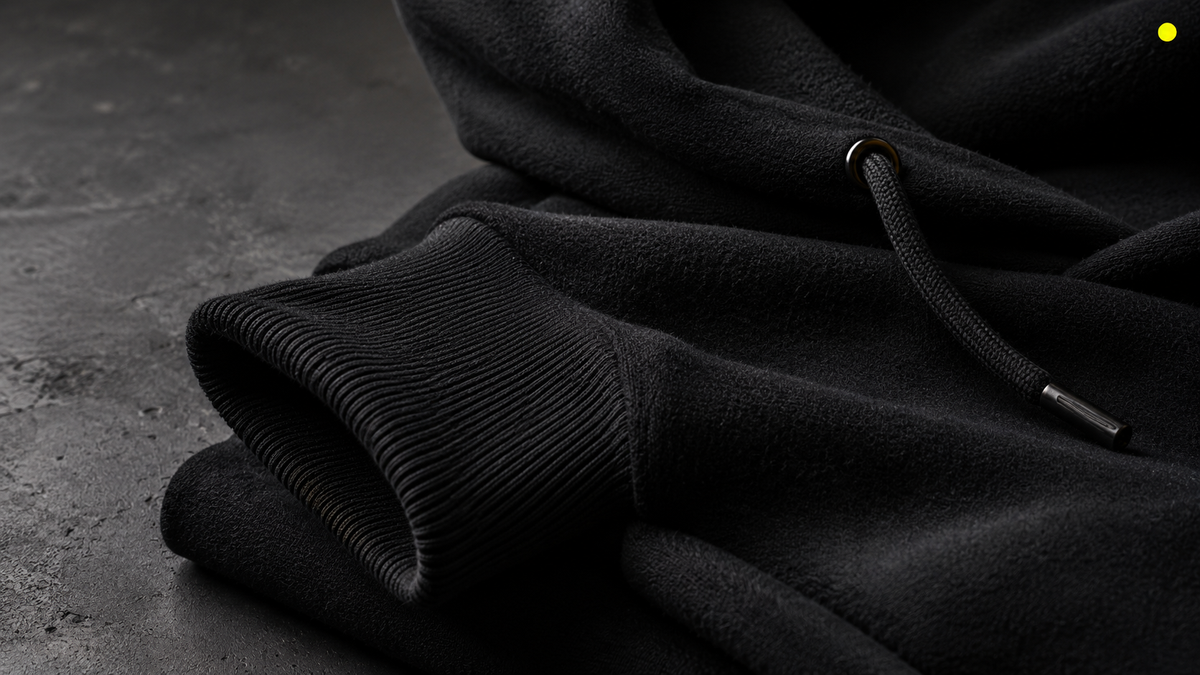
A heavyweight hoodie combines fabric weight with fibre choice, knit structure, fit and finishing. For a clothing brand, the useful brief is more than a GSM target: define the intended handfeel, drape and construction, then evaluate those choices on a physical sample.
For a heavyweight hoodie, 380–500 GSM brushed fleece or heavy French terry can be a starting range to sample, rather than a universal quality standard. Review fibre composition, hood construction, rib recovery, fit and the finished garment under agreed care conditions before approving the specification.
1. Fabric weight (GSM)
GSM means grams per square metre: the fabric's mass per unit area. It does not establish a quality tier by itself. The following ranges are illustrative development starting points, not fixed categories or acceptance criteria:
- 240–320 GSM: a starting range for a lighter hoodie brief; assess drape and layering comfort in the intended fabric.
- 350–420 GSM: a starting range for a heavier hoodie brief; review handfeel and structure on a physical sample.
- 450–500 GSM+: a starting range for a very heavy hoodie brief; check bulk, movement and comfort in the finished construction.
Select fabric weight around the intended wearer, season and silhouette. Fibre, yarn, knit structure and finishing also influence how a garment feels and performs, so a higher GSM alone does not establish better quality or justify a higher price.
2. Fleece type — the feel
Brushed fleece
Terry brushed on the inside for a soft, warm, cosy hand. The premium winter-hoodie standard.
French terry
Looped inside, unbrushed. Breathable and structured — great for year-round and heavier midweight hoodies.
Loopback
Open loops, lighter and breathable, for elevated lighter-weight pieces.
Fibre & blends
100% combed cotton for a clean premium hand; cotton/poly for stability; add spandex at cuffs for recovery.
3. Fit & cut
Fit is where your brand identity lives. Common hoodie cuts:
- Regular: classic, versatile.
- Oversized / boxy: the streetwear default — wider body, dropped shoulder.
- Cropped / longline: for specific silhouettes.
Full pattern grading across your size range keeps the proportion consistent from XS to XXL, so the oversized look doesn't collapse at the extremes.
For a wider silhouette, see our guide to specifying an oversized hoodie fit, from shoulder and sleeve balance to body length, hood proportions and physical sample review.
4. Construction — where quality shows
- Hood: double-layer hood holds shape; custom depth, with rope, flat or eyelet drawcords and metal tips.
- Ribbing: 1x1 or 2x2 rib at cuffs and hem with recovery control so it holds after wash.
- Sleeves: set-in or raglan, with controlled sleeve volume.
- Pocket: kangaroo, split or zip pocket, bar-tacked at stress points.
- Seams: double-needle topstitch and flatlock for durability and a clean finish.
5. Wash, finish & decoration
Garment, enzyme and pigment washes give the lived-in, faded look streetwear brands want. Decoration — screen, puff and 3D puff print, embroidery, appliqué or patches — should be matched to the fleece weight and wash so it survives production and wear.
Develop your hoodie
Specs are half the job — the other half is a factory that hits them consistently at a minimum you can afford. We develop hoodies to your exact GSM, fleece, fit and construction. See our custom hoodie manufacturer page, or our private label hoodie manufacturer page for full-brand programs with your labels, tags and packaging. For a coordinated premium staples range, see our elevated basics manufacturer page.
Heavyweight hoodie FAQ
What GSM should I choose for a heavyweight hoodie?
There is no single best GSM for every heavyweight hoodie. You can use 380–500 GSM as an initial sampling range, then compare the intended fabric, finish and garment construction. Confirm handfeel, drape, fit and agreed care checks on a physical sample; weight alone does not establish quality.
French terry vs brushed fleece — which is better?
Brushed fleece is softer and warmer (winter hoodies); French terry is more breathable and structured (year-round). Neither is "better" — it depends on the season and feel you want.
Can you match a reference hoodie?
Yes. Send a reference sample or tech pack and we match GSM, fleece, hood and rib construction and decoration, then confirm on a physical and PP sample before bulk.
What's the MOQ for custom hoodies?
MOQ starts from 50 pcs per style, with colour and size splits available on most programs.
How long does production take?
Physical sample timing depends on fabric and process complexity. Lead time is confirmed in writing for each project based on specifications, material availability and order quantity. Confirm the final bulk start and completion dates after materials and PP samples are approved.